Call 937-303-4576 or 1-866-LIFEBIO

LifeBio helps individuals and families preserve memories while giving care teams deeper insights that strengthen relationships, improve engagement, and support truly person‑centered care. LEARN MORE
For senior living communities, healthcare providers, and aging‑services organizations, LifeBio provides engagement services and digital tools to create a powerful, person‑centered profile that enhances connection, supports reminiscence therapy, and improves quality‑of‑care outcomes. LEARN MORE
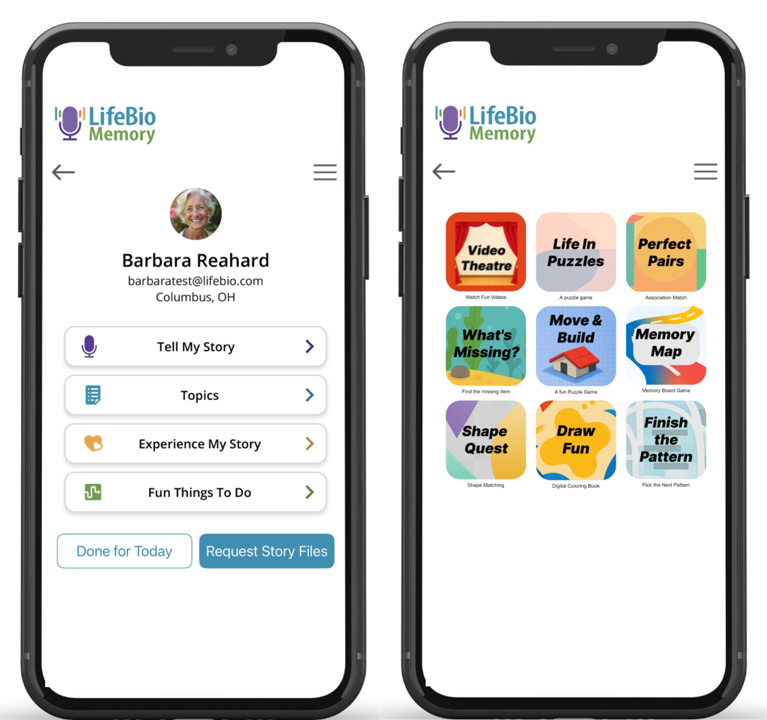
LifeBio helps people be seen, heard, and understood—by caregivers, clinicians, and families—through evidence-based reminiscence therapy powered by thoughtful, human-centered technology. LifeBio leads with what matters most: dignity, identity, and meaningful connection.
The LifeBio Memory app captures experiences, preferences, and more in the person's own voice (or with the help of a trusted family member or friend).
LifeBio is a clinically-informed reminiscence therapy platform designed to preserve identity, strengthen relationships, and improve wellbeing—at scale. LifeBio transforms life stories into living knowledge that can be used every day, in real care interactions.
Our Story Team refines the recorded content to create professional care planning Snapshots, Action Plans, and (optional) Life Story Books. All content is stored securely in LifeBio's HIPAA-compliant cloud storage, creating both operational tools and a priceless legacy.
Evidence-Based. Trusted.
LifeBio is not a one-time storytelling or gifting experience. While many platforms help families collect memories for keepsakes, LifeBio is designed for ongoing use in real care settings.
LifeBio is grounded in decades of reminiscence therapy research and is actively advancing clinical validation through funded studies and partnerships.
Email partnerships@lifebio.com to learn more.
Read the research demonstrating measurable outcomes.
LifeBio Founder Beth Sanders interviewed her own grandmother and realized she'd never known her as a whole person. LifeBio brings that depth to care settings, helping teams see residents beyond diagnoses and deliver more effective person-centered care.